
The Power of Posture: Why Proper Trunk Lean Matters
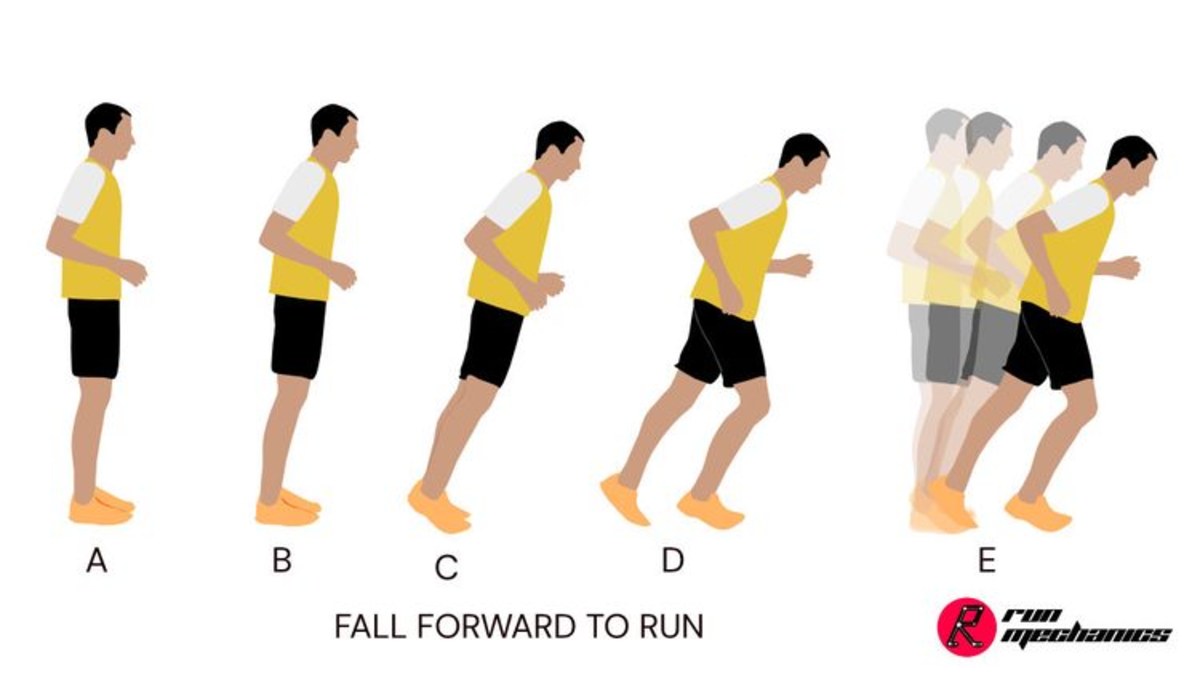 FIG. 04 · THE FALLING DRILL — LEAN FROM THE ANKLES
Whether you're chasing a marathon PR or cruising through weekend long runs, your posture plays a bigger role in performance than you might think. One element that often flies under the radar? Trunk lean — the subtle forward tilt of your torso that, done right, makes your stride smoother, your effort more efficient, and your body more injury-resistant.
Let's dig into why proper trunk lean matters for distance runners, and how to fine-tune it.
What is trunk lean?
Trunk lean is the angle of your torso relative to the vertical line of your body while running. Most coaches and biomechanists agree that a slight forward lean from the ankles — not the waist — is optimal for distance running. It should be natural and subtle, usually no more than 5–10 degrees — just enough to let gravity assist your forward motion.
Why it matters
01 Improves Running Economy
A gentle forward lean aligns your body in the direction of travel, reducing vertical bounce and wasted energy. Upright or overly erect posture forces your legs to work harder to propel you forward; a lean puts gravity on your side, making every step more efficient.
02 Reduces Risk of Injury
Leaning from the hips or slouching causes compensations up and down the kinetic chain — overloading the lower back, hips, knees, and even the plantar fascia. A proper lean encourages a midfoot strike and reduces braking forces with each step, lowering injury risk.
03 Encourages Better Cadence & Stride
With a proper lean, your foot is more likely to land under your center of mass, promoting quicker cadence and better turnover. That helps avoid overstriding — a common problem that increases joint impact and kills efficiency.
04 Engages Core and Glutes
Good posture activates the right muscles. A neutral spine and forward tilt demand engagement from your core, glutes, and hip flexors — all critical for distance running. Weak trunk posture shifts the work onto passive structures like joints and ligaments.
Common mistakes
Like a sail catching the wind, your torso's position determines how efficiently you move through space.
How to improve your trunk lean
01 Lean From the Ankles
Stand tall and practice a gentle forward lean from your ankles — like you're just starting to fall forward. That's your sweet spot.
02 Strengthen Core & Glutes
Planks, bridges, dead bugs, and bird-dogs build the foundation for good running posture.
03 Scan Your Posture On the Run
Every few miles, run a quick check: head neutral, chest open, shoulders relaxed, slight forward tilt from the ankles.
04 Use the "Falling Drill"
Practice leaning forward while standing and letting gravity initiate your motion — a helpful cue to internalize the feeling of a proper lean.
05 Record Your Form
Video yourself from the side on a treadmill or flat surface. A slight lean should be visible, with the torso forming a straight line from the ankle through the ear. (This is exactly what we measure in a Video Running Analysis.)
Final thoughts
Proper trunk lean is subtle, but its impact is significant. With a slight, controlled forward lean from the ankles, you can run stronger, longer, and with less risk of injury. Good posture isn't just for standing tall — it's for running smart.
Want eyes on your lean?
Our Video Running Analysis measures your trunk angle, cadence, and strike — frame by frame — then builds the cues and drills to dial it in. Book a session and see your form like never before.
Book Now →